Getting ahead of hypertension: Pharmacists join care earlier to accelerate blood pressure control
A new hypertension management workflow is bringing Geisinger pharmacists into care earlier, helping primary care teams respond more quickly when blood pressure remains elevated and giving patients a clearer path toward control.
Stacey Grassi, Leeann Webster
For many patients, getting blood pressure under control takes more than a prescription. It takes timely follow-up, careful medication adjustments, and a care team ready to respond when readings remain high. A new hypertension management workflow is bringing Medication Therapy Disease Management (MTDM) pharmacists into the process earlier, helping primary care teams support patients sooner and more consistently.
Hypertension is one of the leading modifiable risk factors for cardiovascular disease, but achieving blood pressure control often requires repeated assessment and timely action. Missed follow-up visits, medication-related adverse effects, adherence concerns, and delays in intensifying therapy can all prevent patients from reaching their treatment goals.
Geisinger’s Improving Hypertension Control dashboard identifies opportunities to improve hypertension monitoring and control across primary care. The dashboard tracks encounters involving an initial blood pressure reading above 140/90 mm Hg and evaluates key performance indicators, such as whether a confirmatory reading was obtained, follow-up was scheduled or completed, and antihypertensive therapy was intensified when appropriate.
The dashboard provides clinic-level performance reports, highlighting for Community Medicine leaders and practice teams where elevated readings are being addressed consistently and where additional process support may be needed.
Earlier pharmacist involvement in primary care
Geisinger currently has 45 MTDM pharmacists embedded within 37 Family Practice and Internal Medicine ambulatory clinics. Practicing under collaborative practice agreements, these pharmacists manage medication therapy for several chronic conditions, including hypertension. Historically, patients were often referred to MTDM only after hypertension became difficult to control, sometimes after treatment with three or four medications.
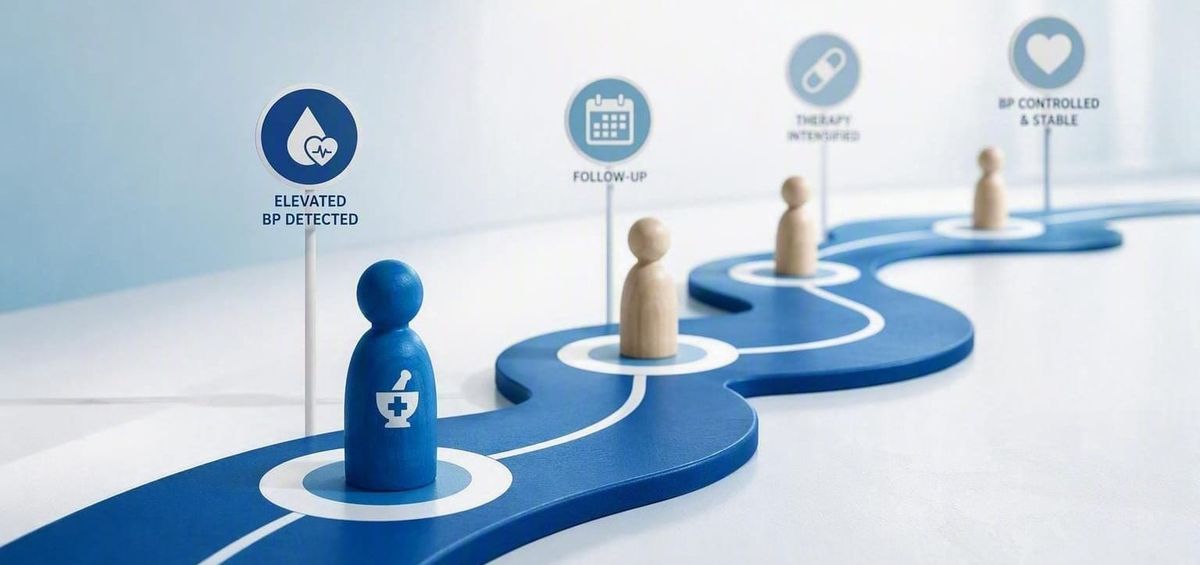
The new workflow shifts pharmacy involvement to an earlier point in care. For the initial rollout, the pathway focuses on patients recently started on their first antihypertensive medication. The primary care clinician initiates treatment and schedules a two-week blood pressure check with a nurse. If the patient’s blood pressure remains above 140/90 mm Hg at that visit, the nurse initiates an MTDM referral and routes the encounter to both the clinician and the pharmacist.
Once the referral is authorized, the pharmacist contacts the patient, reviews the elevated reading, and determines the appropriate next step. That intervention may include addressing adherence or medication-related concerns, adjusting or intensifying therapy, arranging laboratory monitoring, and providing education. The pharmacist then schedules another blood pressure assessment, generally within two weeks, and continues to manage the patient until blood pressure is controlled and the regimen is stable.
This workflow creates a clearly defined, consistent handoff rather than relying on repeated messages between nursing and the primary care clinician after each blood pressure check. It also allows pharmacists to act within a collaborative practice agreement while remaining connected to the broader care team. When findings suggest a possible secondary cause of hypertension or a more treatment-resistant condition, the pharmacist can coordinate further evaluation with the primary care clinician or involve MTDM pharmacists who specialize in nephrology.
The program is also designed to use clinical capacity responsibly. Patients are not intended to remain in pharmacist-managed care indefinitely. After patients reach their blood pressure goal and remain stable without recent medication intensification, they graduate back to routine primary care. This approach preserves pharmacist appointment capacity for new patients or those who need more frequent medication management.
Expanding the model and measuring impact
The pilot began in March 2026 at one primary care clinic. Three additional clinics joined in June, followed by four more in July. The team is working toward implementation across all primary care clinics and plans to extend the workflow to additional MTDM pharmacists working at Geisinger 65 Forward’s 10 senior-focused primary care clinics.
Although formal outcome data are still being collected, preliminary experience suggests that pharmacist involvement is helping standardize follow-up and increase achievement of blood pressure targets. The initiative has also increased awareness of hypertension performance across primary care, encouraging closer attention to repeat measurements, follow-up, and appropriate treatment changes.
Future plans include helping patients learn proper home blood pressure monitoring, providing access to home monitors, and developing a process for patients to share readings directly with their pharmacist. This next phase could reduce the need for some in-person visits while giving the care team more timely information to guide treatment.
By moving pharmacists upstream, Geisinger is building a more proactive model for hypertension care. The program extends the primary care team at a point when focused medication management can help prevent therapeutic delays, support patients through the early stages of treatment, and create a more reliable path toward blood pressure control.